
Natural Stone Floor Cleaning in Pinellas, Hillsborough & Manatee
Stone Floor Cleaning in Pinellas County
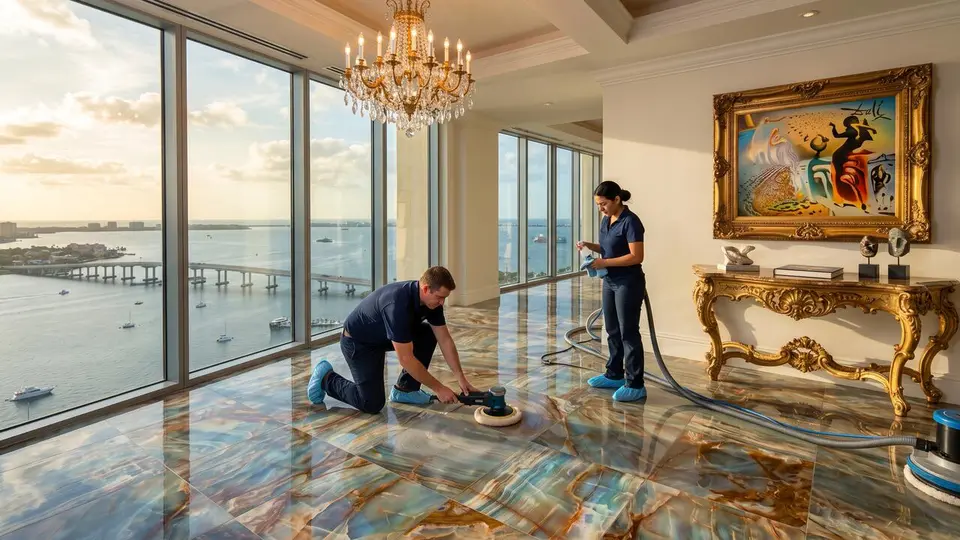
Picture This: The New Condo on Treasure Island
You just closed on a condo on Treasure Island. The view is everything you hoped for, but the floors came with the previous owner's habits: marble in the bath, travertine in the living room, granite on the counters, and all of it dull, stained and cleaned for years with whatever was under the sink. Every stone needs its own approach. We identify each one, clean it with the right method, and polish and seal it so the whole place feels new before you move in.
Our Stone Floor Projects
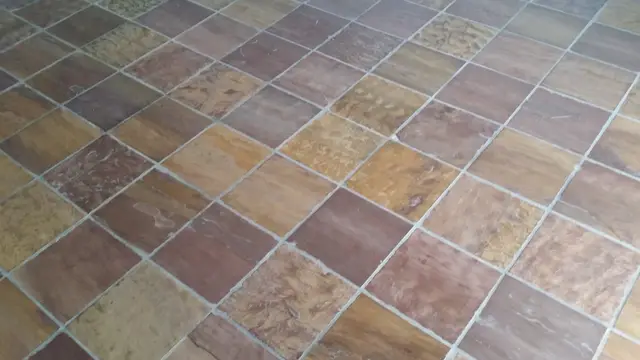
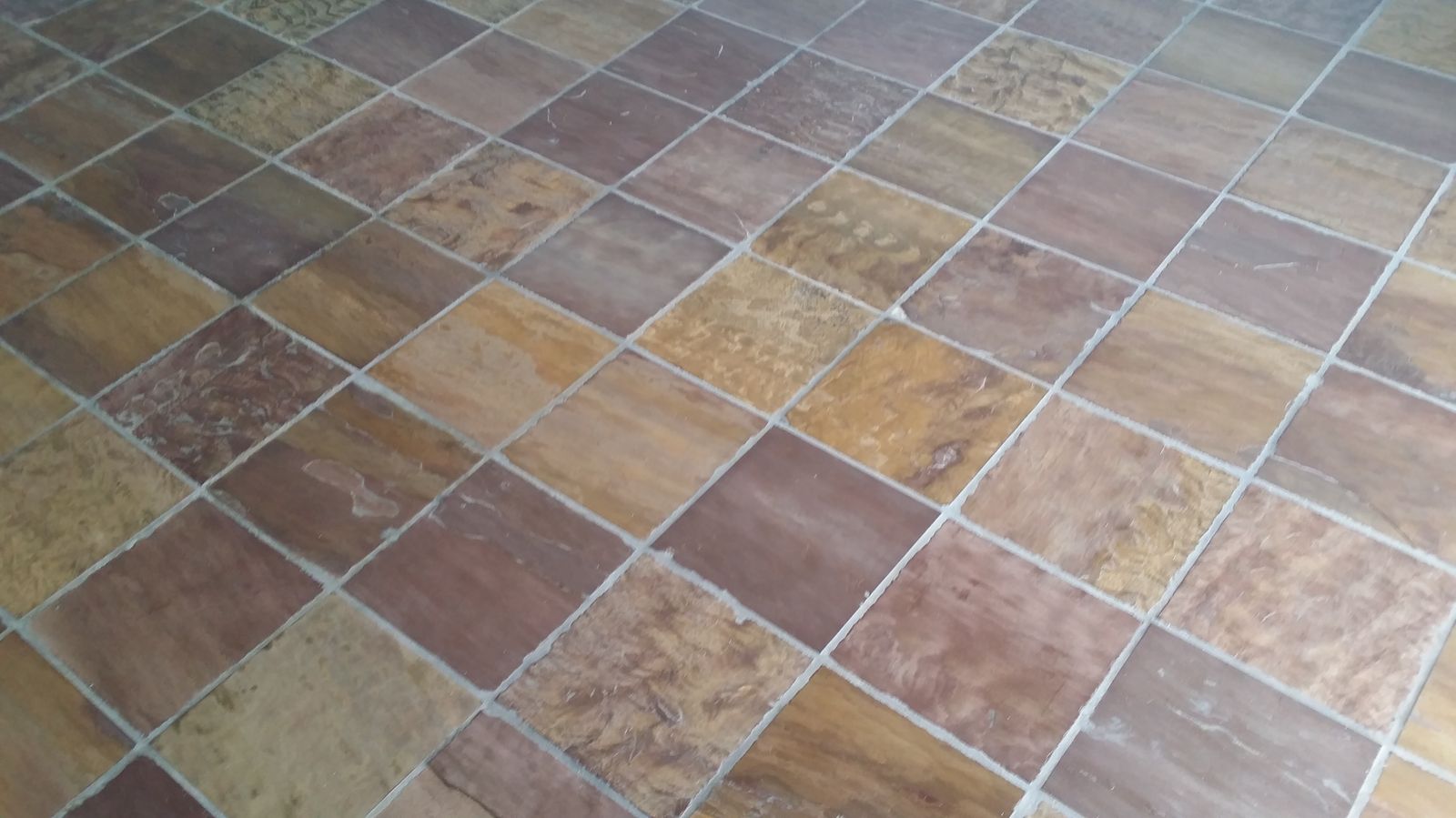
Limestone, onyx, slate, marble and travertine — each stone cleaned the way it needs.
Stone Floor Cleaning Stone floor cleaning will depend greatly on the type of stone being serviced. An unpolished limestone has different needs then a polished granite. The first step is determining the type of stone and how it has been finished. Smooth polished stone like marble, travertine, polished limestone, and granite get cleaned using polishing compounds while porous stone like limestone, tumbled marble, sandstone, and unfilled travertine need a contained pressure washing system to rinse the dirt and detergent from the pores of the stone.
Dirt embedded it small scratches in the stone floor make the floor look dirty and dingy. To make the floor look clean again it needs to be polished with a marble restoration polishing paste to remove thedirt and restore the shine. The oxalic acid in the polishing paste draws dirt from the stone and grout. The abrasives in the polishing compound blends out small scratches restoring the consistency of the floors luster. A consistent luster not only makes a polished stone floor look cleaner it makes it easier to keep clean. For unpolished or very porous stone a contained hot water extraction cleaning system is used to rinse embedded dirt and detergent from the pores of the stone and grout.
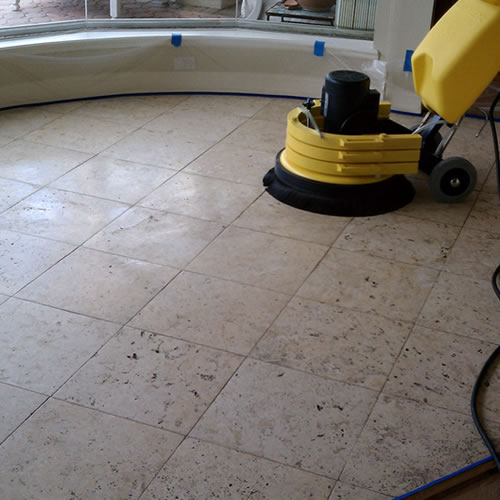
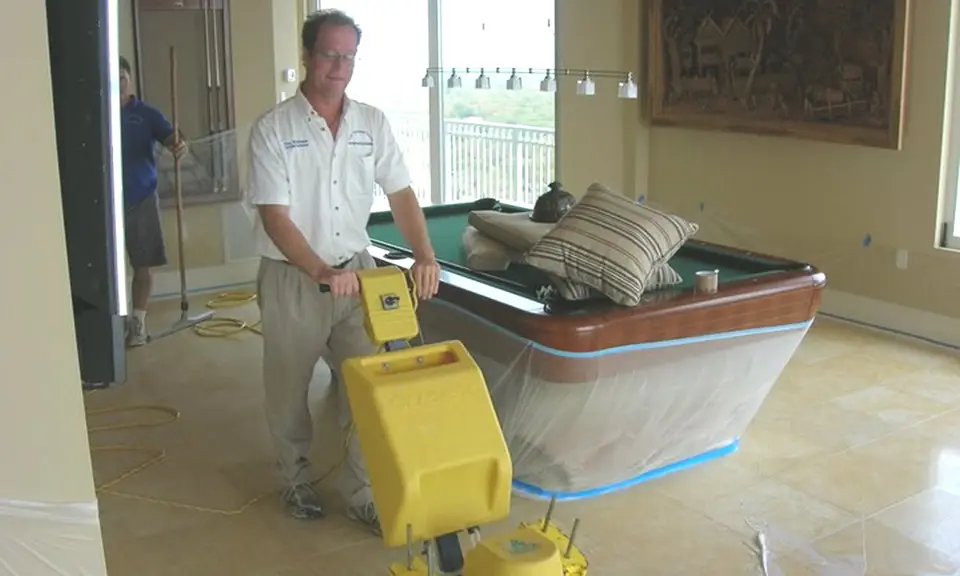
The hot water extraction system uses pressurized water in a cleaning cyclone under a contained wash head. This uses 3-4.5 gallons of water per minute that scrubs the floor and draws dirt and detergent from deep within the stone and grout. Vacuum ports around the edge of the rinse tool immediately suck up and remove the water. The floor never gets more then mop damp but gets a very thorough pressure washing. Stain removal in a stone floor can be complicated by the stones sensitivity to acid grout cleaning detergents.
To remove a stain it can be either dissolved with a solvent, drawn out with a poultice, or bleached out with an oxidizing agent. Oil stains in a stone floor can be dissolved and removed using solvent detergents. The solvent detergent soaks slightly into the surface of the stone floor and dissolves the embedded oils drawing them to thesurface where they evaporate with the solvent. Solvents work well on oily spots but do not work very well on organic spots, urine staining, mineral stains, or deeply penetrated oil stains. Deep oil stains need a poultice to slowly soak into the stone and then draw the stain out of the stone.
A simple home poultice can be made by mixing a concentrated hydrogen peroxide and diatomaceous earth. They are mixed into a soupy paste and poured onto the stained areas covering the stained area an inch thick and then covered with a piece of plastic wrap. This seals the poultice from the air andgives the water no place to go but down. This draws the poultice deep into the stone. It bonds with the stain and is drawn to the surface and captured in the diatomaceous earth. After 3-4 days the plastic is pulled up and the poultice is swept up. The area then only needs a slight wiping down after the poultice is done. Poulticing does not affect the polish of a stone floors but highly polished floors may need longer for the poultice to penetrate.
Organic material embedded in the pores of a stone floor can discolor as they break down or are converted into mold. To safely clean organic stains from a stone floor an oxidizing detergent is used. Hydrogen peroxide is a safe oxidizer for most stone floors when mixed with a capful of ammonia to raise the PH(NEVER MIX AMONIA WITH BLEACH). This needs to soak into the surface of the floor and worked into the trouble areas with a mop or scrub machine. The longer the solution stays wet on the floor the better it works. This bleaches out organic stains and destroys and dissolves organic material in the stone making it an effective treatment for urine contaminated stone floors or flood damaged floors.
Rust spots in a stone floor can be very difficult to remove as most rust removers are acids and damage stone. Rust removing gel can be used to remove rust stains without damaging the stone. The gel is tricky to use and can leave a blue stain if left on too long.
Our Stone Floor Projects
Limestone, onyx, slate, marble and travertine — each stone cleaned the way it needs.
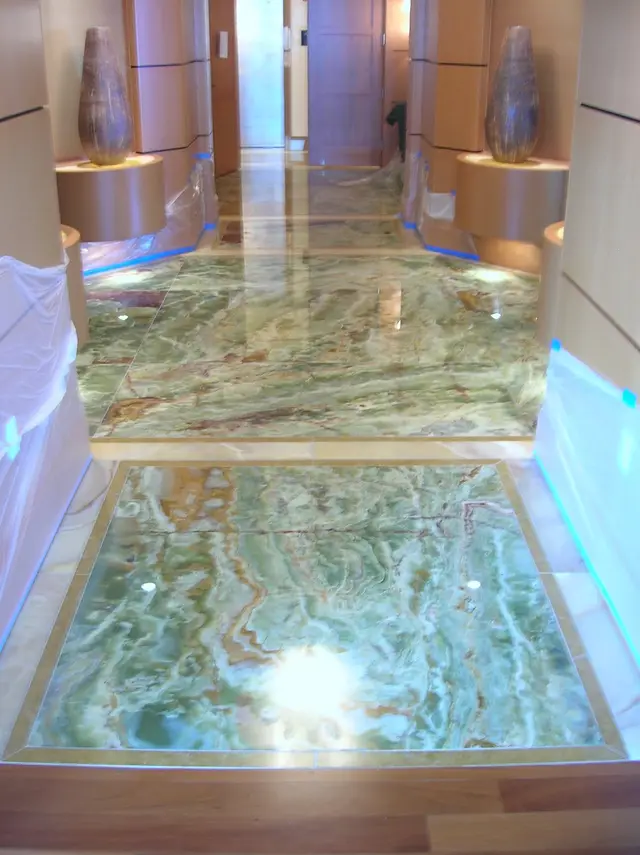
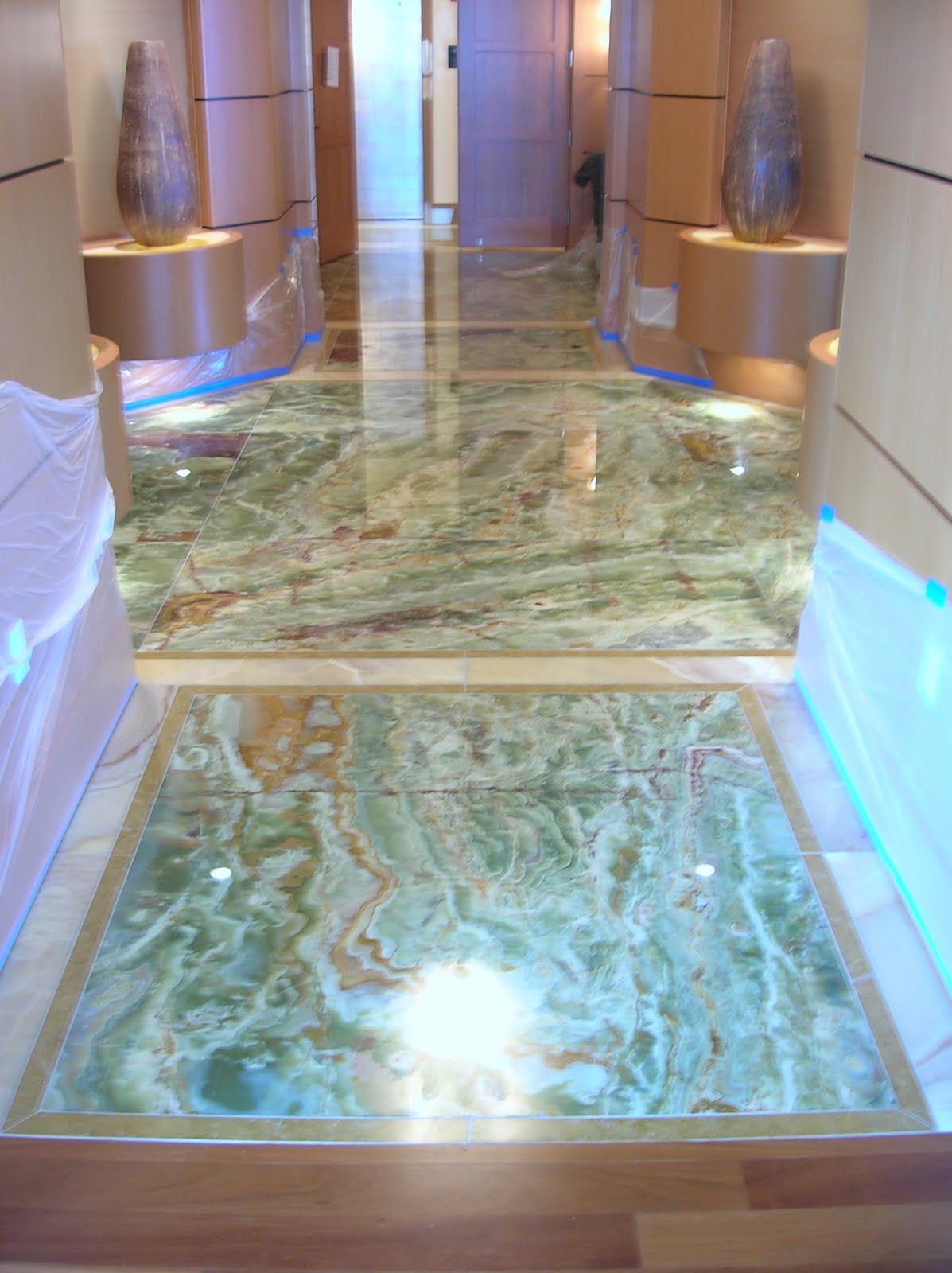
OnyxExotic Onyx Stone Floor Refinishing
limestone_cleaning_small
stone_floor_cleaning_small
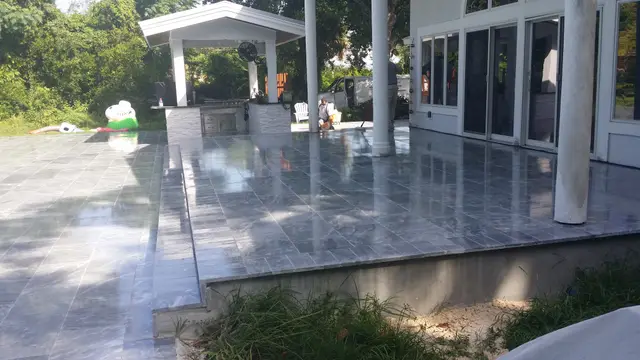
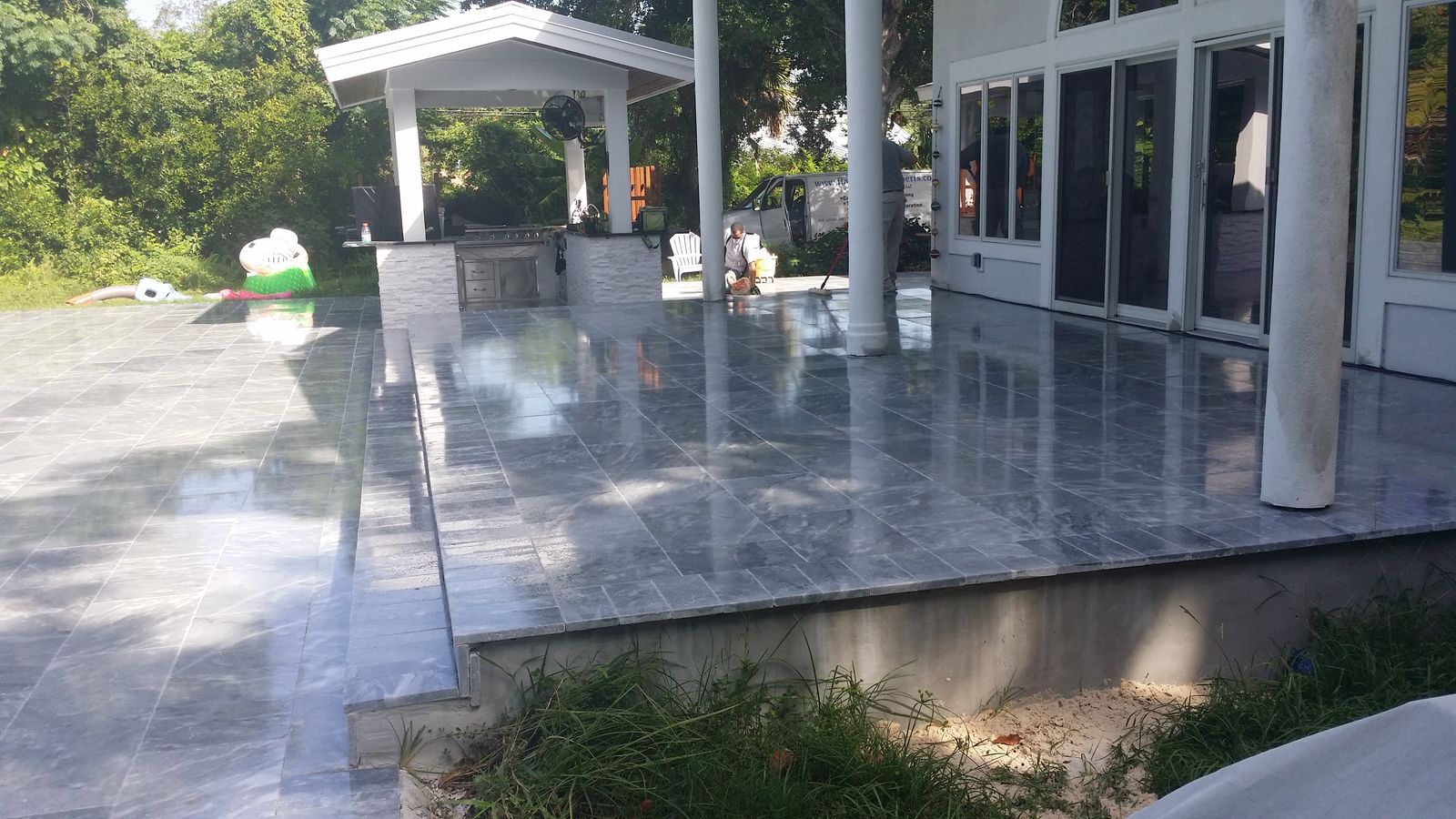
Exterior Marble Cleaning and Sealing with Drytreat StainProof and Color EncahncerOutdoor Marble Floors cleaned and sealed by Floor Cleaning Experts.
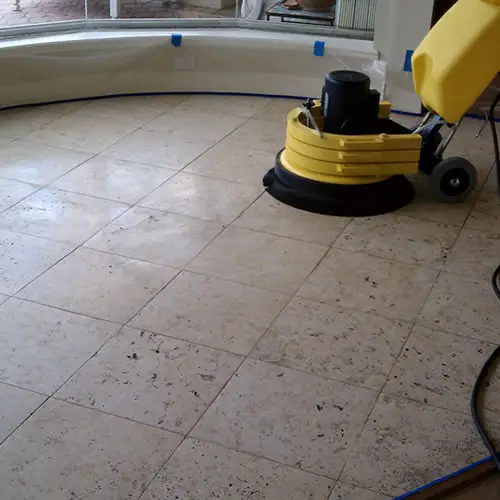
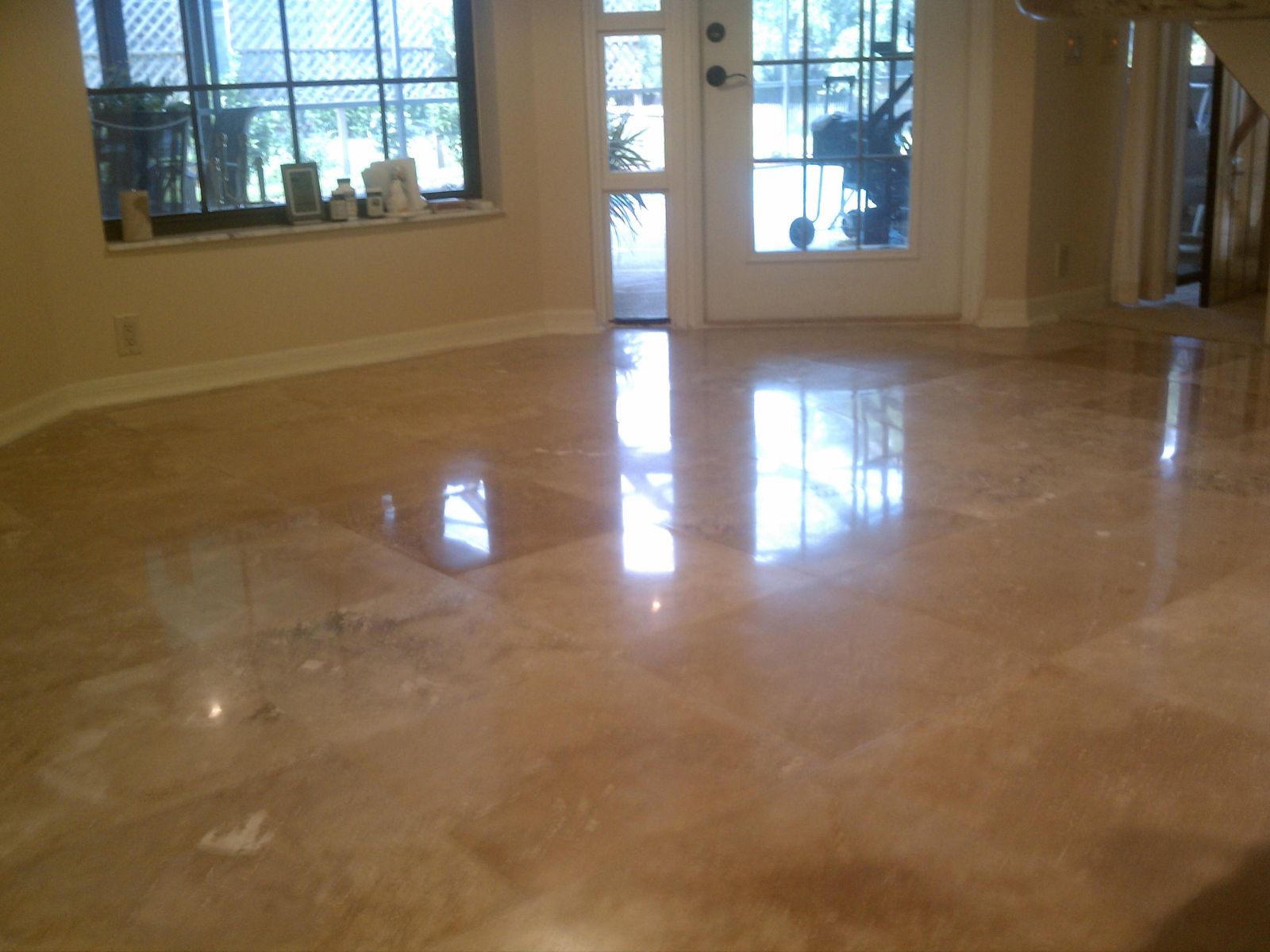
stone_floor_refininshingTravertine Cleaning & Polishing
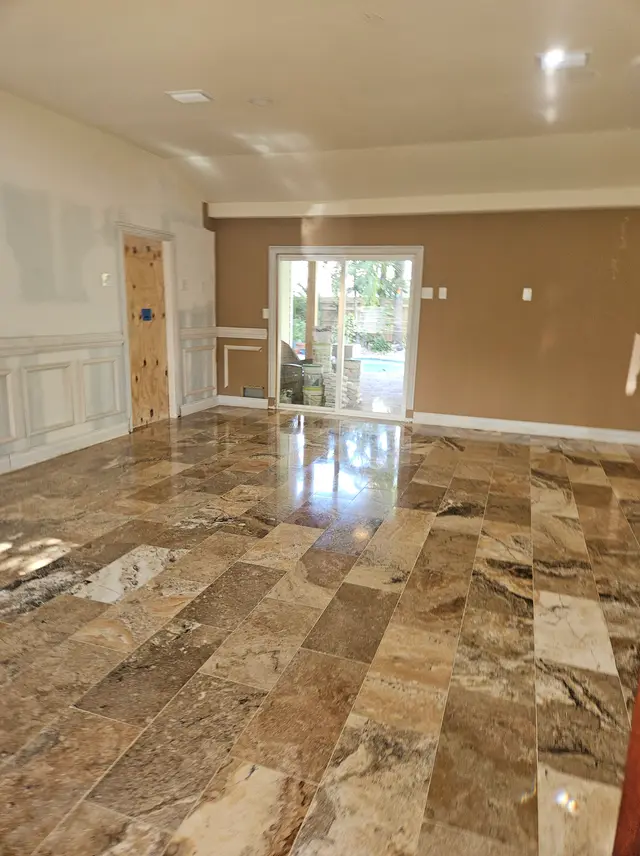
2e155d92-d593-4149-9a48-ad9fc532886f-1_all_1077
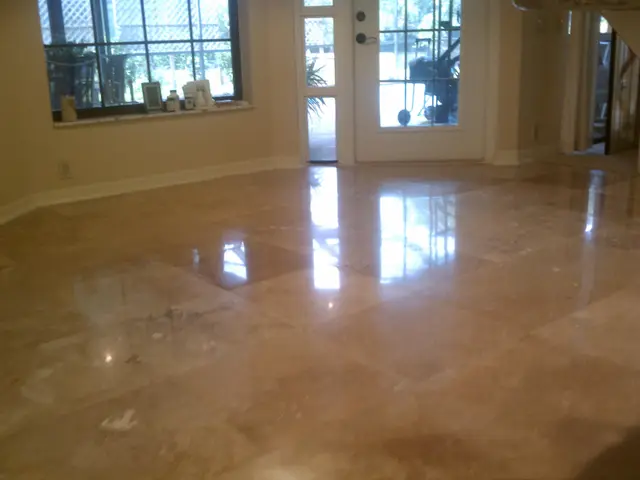
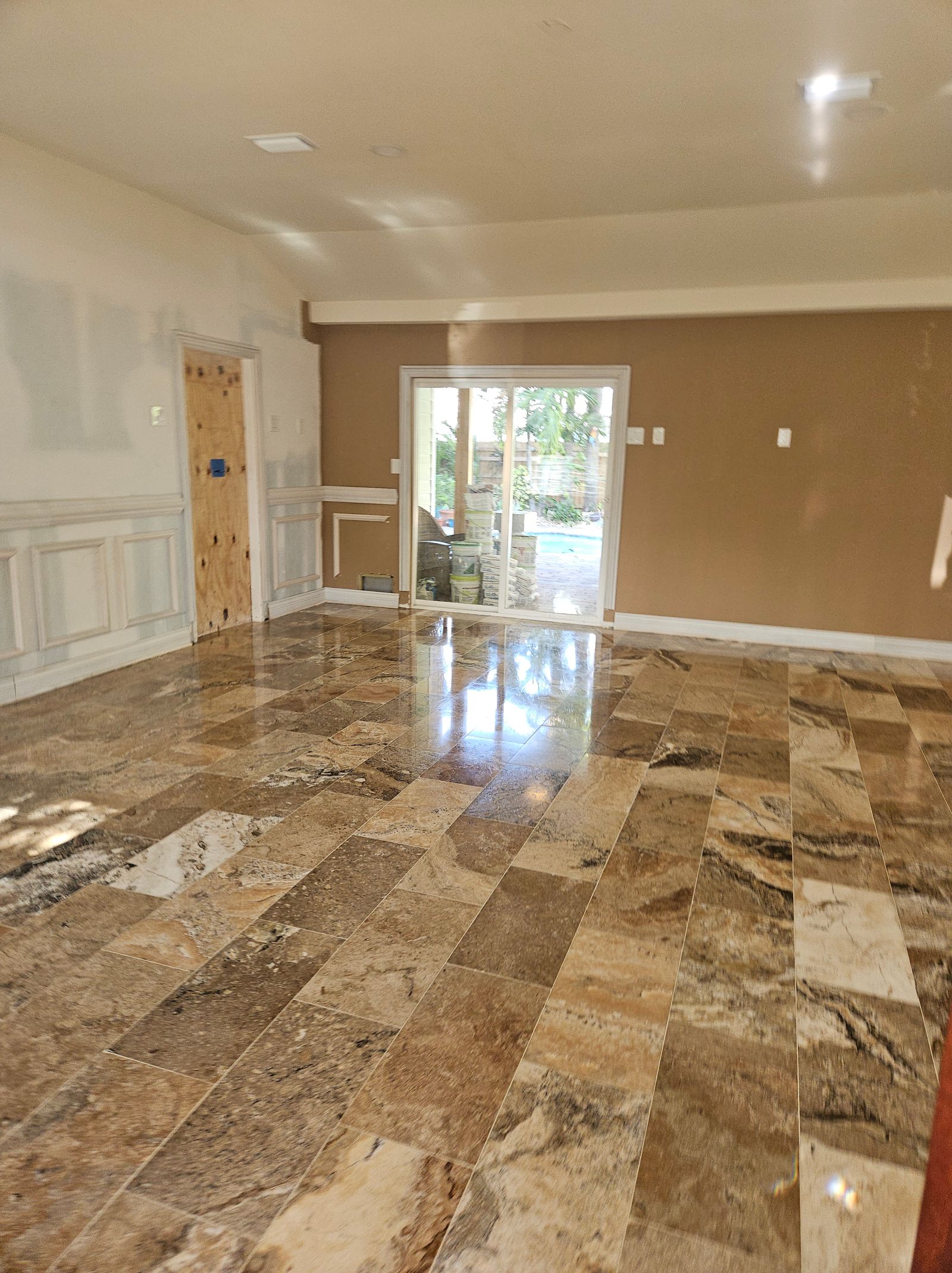
Clearwater Travertine Leveling and Polishing – Tom WorkmanTravertine that shines
20141227_100941
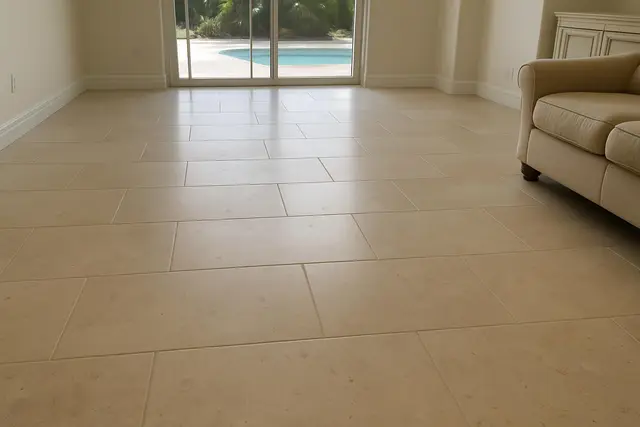
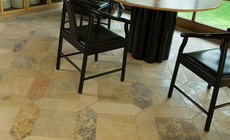
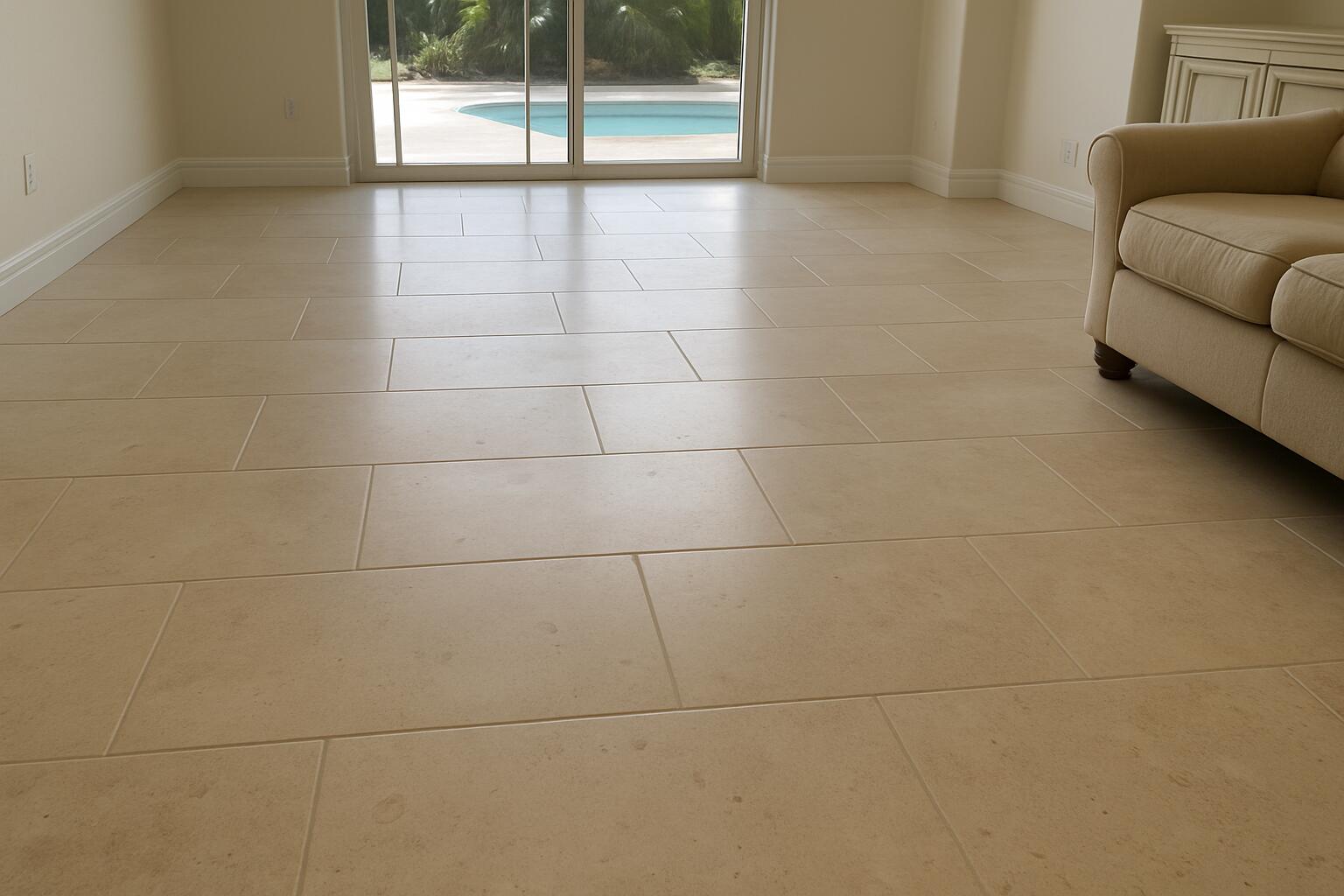
Honed limestone floor, cleaned and sealed
Some Stats
"Everyone’s stone floor is as unique as the person that chose the floor in the first place. Your floors, counters, walls, deserve someone’s attention that has “been there” and “done that”. We’ll treat each floor with the respect it deserves, especially when it comes to clean up, and protecting the environment that the stone lives in. With the investment you have in your floors, you’d never settle for someone’s first time out, and we would never give you anything but our best.
- 4145Stone Floors Restored and counting
- 3Generations of Floor Care
- 3Generations of Floor Cleaners, and hoping
Who Is Floor Cleaning Experts
You just might get a surprise opera sample when getting your stone floors refinished.
In Tom's spare time, Tom is an active participant in local theater, and local opera, as well as finding time to relax with a raucous weekend band of fun-loving rag tag collection of misfits! Life is not all work - but your floors - that's serious business.
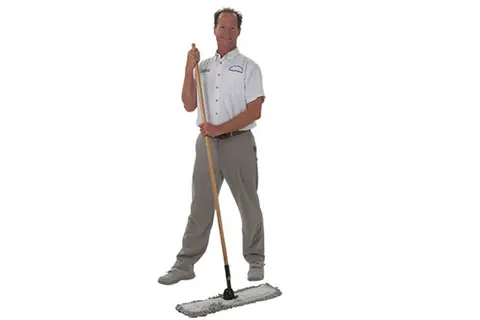
Tom Workman
President
Third Generation Floor Cleaning Expert
Ripley
Company Mascot
OperMan Tampa
Tom's Alter Ego
OperaMan Tampa
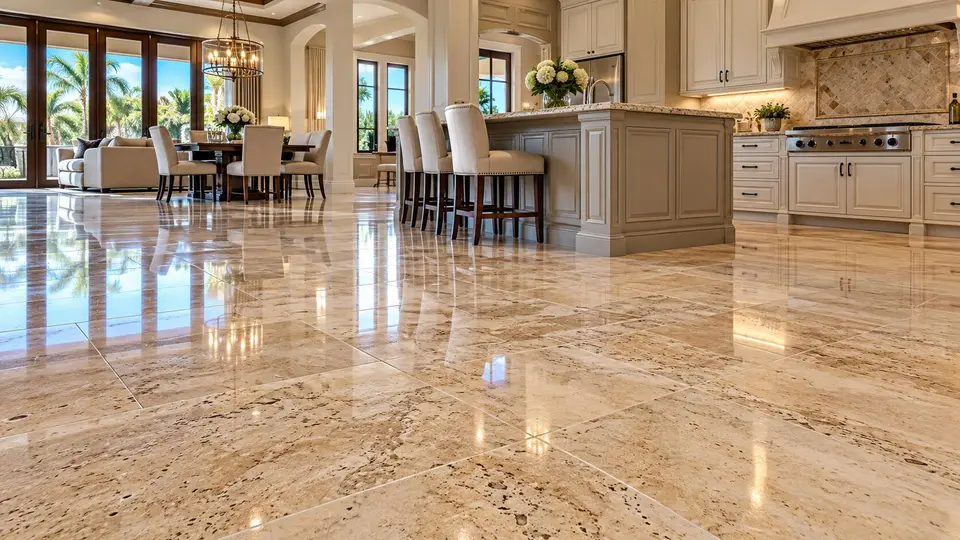
We Love Your Floors
We will treat them like our own, just like we have for 3 generations.
Reach Us
We can't wait to hear about your Stone Floor Project! Reach out to us, and we will be back to you promptly and professionally.